New warning labels warning on plastic content coming to Sweden
17 January 2022
New warning labels warning on plastic content coming to Sweden soon
Zero Waste Stockholm had the opportunity to Interview Åsa Stenmark, Material flow expert at the Swedish Environmental Agency, regarding EU ‘s single-plastic ban directive that was supposed to be voted in Sweden early this summer but was finally voted in early November. From this interview we have gained insights on what the directive includes in Sweden and have summarized it below together with some key definitions. ZWS also did a careful review of the directive early this year and sent a “remiss” with the points where we thought the directive not sufficiently precise or restrictive.
📝 Written by Nicholas Smart
What do wet-wipes, balloons, cigarette butts, and plastic bags have in common? These four items contain “single use plastics,” which means they are put on the market with the intention of only being used once. In the coming months, shoppers in Sweden will see single-use plastics labelled with a striking label warning them of the negative environmental impacts of plastic as part of a broad new directive.
Interview with Åsa Stenmarck
Åsa Stenmarck, material flow expert with Naturvårdsverket (the Swedish Environmental Protection Agency), recently spoke with Zero Waste Stockholm about the EU-plastic directive, a transformative legislation that aims to reduce the disastrous impact plastic litter has on nature – and will have changes the everyday person in Sweden will see in stores, shops, and their home.
“The question that we need to answer is not how to get rid of plastic, but rather how and where it should be used.", said Stenmark, a KTH graduate known for her action against the excessive use of plastic.
Ten most common items
The EU directive specifically takes aim at reducing the ten single-use plastics items that are most commonly found in nature: cotton bud sticks, food utensils (cutlery, plates, straws, and stirrers), balloons and sticks for balloons, food containers, cups for beverages, beverage containers, cigarette butts, plastic bags, packets and wrappers, sanitary items such as wet wipes.
The legislation states that these ten items will be forbidden from being imported into the Schengen area beginning in January 2022. Naturvårdsverket goes further in its version of the plastic directive to cover food containers, such as the triangular-shaped plastic sandwich boxes, or snacks packaging, whose contents can be consumed right out of the box without any further preparation.
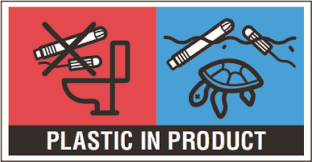
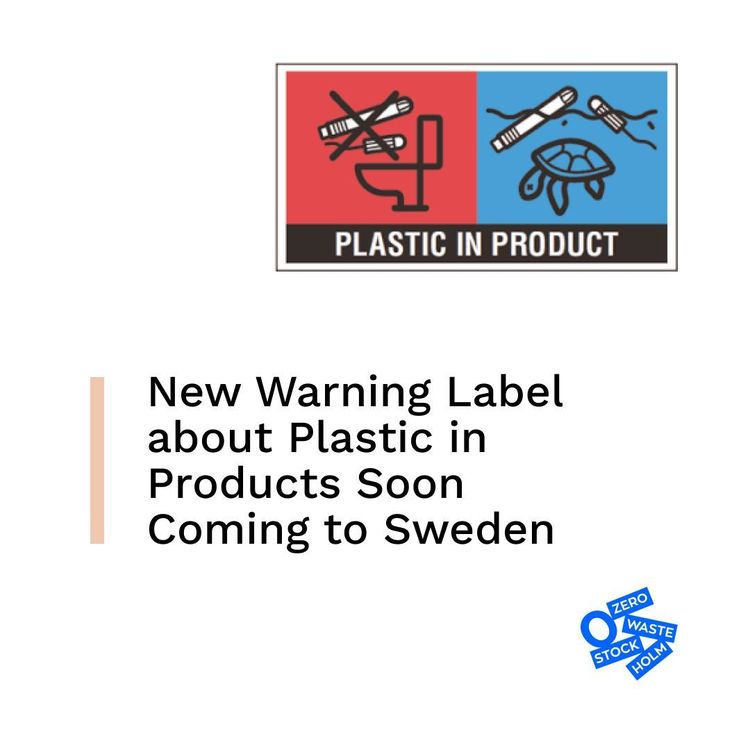
How about the single-use plastics on the list that are already in shops, cafés and restaurants and that have yet to be used? The new directive allows them to continue to be sold until stocks are depleted. For all other single-use plastics, a new label will be required! It includes tampons, pre-wetted personal care wipes, tobacco-products and beverage cups. The label, for which the English-version states in all-caps “PLASTIC IN PRODUCT,” warns people to not improperly dispose of the product and shows the item near a sea turtle that appears to be in distress.
A world where Bringing Your Own containers and circular packaging is the new norm
And what changes will customers see in their local store? From January 2024, shops, restaurants, and cafés will be required to inform customers about their single-use products and the possibility to bring their own container, and to offer customers reusable alternatives, an initiative that falls well in line with the Zero Waste Stockholm Bring-Your-Own Initiative! Whether or not single-use cups or lunch boxes will be treated like single-use plastic bags, which have an extra tax at the register, remains a point of discussion in the Swedish Parliament.
Ban includes bio-based plastics
The Swedish variant of the new EU plastic directive goes further to ban biodegradable, bio-based, and oxo-degradable plastics. That’s because biodegradable plastics don’t disappear, but rather fragment into microscopic pieces and can still end up as pollution in the environment. Oxo-degradable plastics, which are commonly used by farmers to protect plants, are only degradable, not biodegradable, or compostable, likewise resulting in pollution.
New fines for littering
Also in the Swedish version of the directive is a new littering law. Consumers who litter small pieces of trash haven’t always been required to pay a fee. Beginning January 1st, 2022, littering small pieces of rubbish, including cigarette-butts, candy wrappers, or chewing gum—all of which generally contain plastic—will carry a fine. This includes products like plastic confetti, that ironically enough, will still be permitted on the shelves of Swedish stores.
Naturvårdsverket has set up milestones for phasing out single-use packaging in the Swedish market. Producers will be required to report data to Naturvårdsverket on how much single-use and reusable packaging that is placed on the market and yearly reviews of such data will take place beginning in 2022. Nonetheless, the directive lacks measures and standards for determining what constitutes a reusable product. In the worst of cases, this could allow producers to state that their single-use plastic cutlery is reusable, despite being made of cheap, breakable plastic.
In a world full of waste, it is Åsa’s inner sense of optimism—her feeling that the world is a ship that can be steered in the right direction—that keeps her motivated. In her personal life, Åsa uses reusable items such as grocery bags and silverware while out and about because she knows that it makes a difference. Nonetheless, she stresses the importance of systematic change, which goes beyond the role of the individual. At the end of the day, it is important to remember that producers, retailers, and consumers alike play a role in creating the world we want to live in.
Sources
● Directive (EU) 2019/904 of the European Parliament and of the Council of 5 June 2019 on the reduction of the impact of certain plastic products on the environment (Text with EEA relevance). PE/11/2019/REV/1. https://eur-lex.europa.eu/eli/dir/2019/904/oj ● Miljödepartementet (2021). Klart med ny lag om böter för nedskräpning. Pressmeddelande. https://www.regeringen.se/pressmeddelanden/2021/09/klart-med-ny-lag-om-boter-for-nedskrapning/ ● Swedish Environmental Protection Agency (2021a). The Swedish EPA’s Roadmap for the Sustainable Use of Plastics. www.naturvardsverket.se/publikationer ● Swedish EPA (2021b). Återanvändning av förpackningar. https://www.sverigesmiljomal.se/etappmalen/ateranvandning-av-forpackningar/