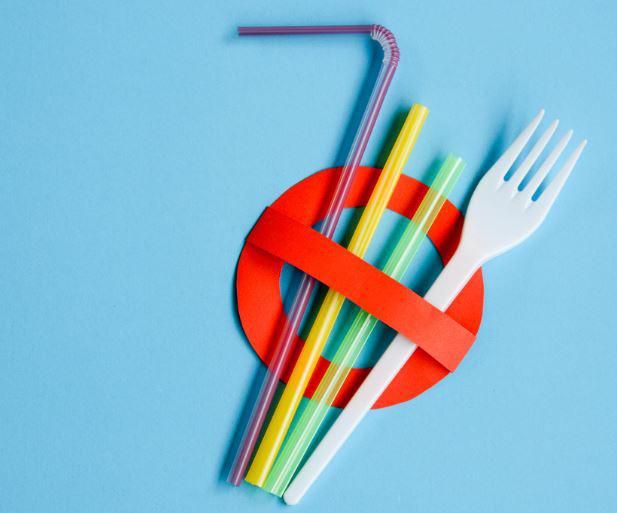
EU’s Single-Use Plastics Directive: Focus on Reducing Consumption!
18 April 2020
EU’s Single-Use Plastics Directive: Focus on Reducing Consumption!
The Swedish Environmental Protection Agency has been tasked by the government with investigating how the EU Single-Use Plastics Directive should be implemented in Sweden. Zero Waste Stockholm participated in stakeholder dialogue meetings on reducing the consumption of single-use plastics!
Implementation of the EU Single-Use Plastics Directive with a Focus on Reducing the Consumption of Single-Use Plastic Products
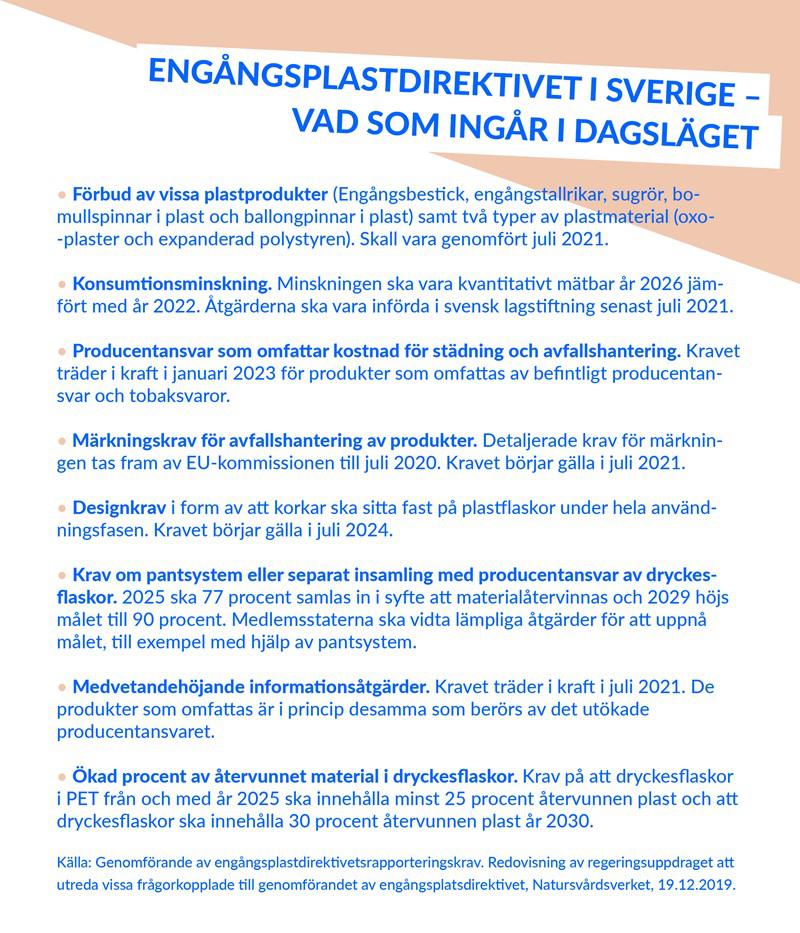
The Swedish Environmental Protection Agency has been tasked by the government with investigating how the EU Single-Use Plastics Directive should be implemented in Sweden. You can read more about the assignment here, and below you will find a summary of what is included in the Directive, as well as the timeline for the various proposals.
Other Participating Organizations
Panini Internazionale, Maidenfoods AB, Max Burger AB, Wayne's Coffee HQ, ICA Sverige AB, Food Folk Sverige AB, SJ AB, Kingfood Sverige AB, Returpack AB, Tingstad, Sveriges Entreprenörer Service AB, Svensk Dagligvaruhandel, Martin & Servera AB, Svensk Handel, Livsmedelsföretagen, PantaPå, Visita, Skogsindustrierna, Håll Sverige Rent, Duni, Städa Sverige, Circle K Sverige AB, Löfbergs, Spendrups, ÅF Consult, Luger - Way Out West, Naturskyddsföreningen, Coca-Cola, Tetra Pak, OK-Q8 AB, Åhléns, Livsmedelsverket, Svenska Köttföretagen, Stora Enso, Stockholm Vatten och Avfall, the Ministry of Environment, and the Ministry of Enterprise and Innovation.
Objectives of the Dialogue
Proposals on how consumption can be reduced, as well as feedback on policy instruments to implement the reduction requirement, with the aim of contributing to cost-effective legislation that is easy for businesses and public authorities to apply.
The meeting began with an overview of what is included in Article 4 of the EU Single-Use Plastics Directive—which concerns the reduction of consumption of single-use plastic products—in order to establish a clear framework for the discussions. During this introduction, the various food and beverage plastic products covered by the Directive were presented. These products, listed below, should be included under Policy Instrument 1, which concerns bans. The link below provides a more detailed overview of the different types of packaging covered.
One of the positive surprises of the day was that all types of plastic, including so-called "bioplastics", were included in the definition of a single-use plastic product (although this was not explicitly stated in the meeting materials, it should be reflected in the meeting notes):
- Consists wholly or partly of plastic, including all forms of plastic, even those marketed as "bioplastics"
- Not intended to be used multiple times
What Does Article 4 of the Single-Use Plastics Directive Mean?
Member States shall take the necessary measures to achieve an ambitious and sustained reduction in the consumption of cups and food containers that are single-use plastic products. The reduction must be quantitatively measurable by 2026 compared with 2022 levels.
As you can probably see from the participant list at the beginning of this document, most of the stakeholders represented producers, and they clearly demonstrated through their participation that they opposed bans or requirements aimed at reducing the consumption of single-use plastic products, which made discussions more challenging. This was evident in the Swedish Environmental Protection Agency's summary of the day, although there was still disagreement about what had actually been said. They did, of course, contribute a number of positive suggestions throughout the day.
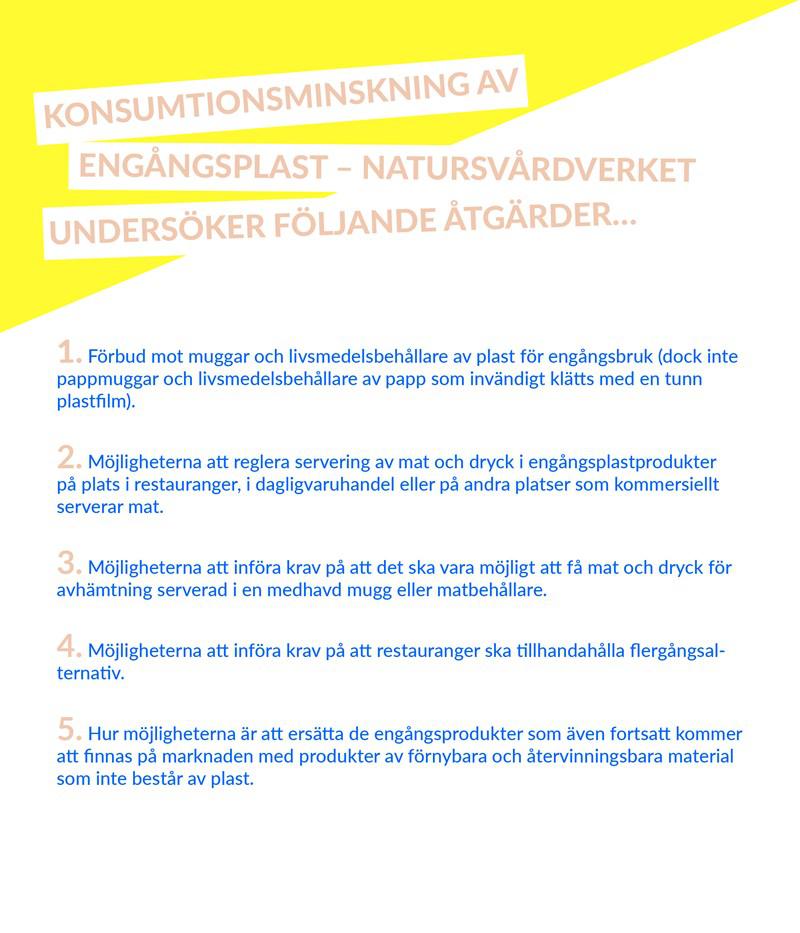
To focus on the positive outcomes and what we sought to achieve during the meeting, we have outlined our proposals below for the different policy instruments. We set Policy Instrument 1 aside, as we hope the proposed ban will be adopted.
1. The Possibilities of Regulating the Serving of Food and Drinks in Single-Use Plastic Products for On-Site Consumption in Restaurants, Grocery Stores, or Other Commercial Food Service Locations
We believe that serving food intended for on-site consumption in disposable products should be prohibited. Some of the counterarguments raised during the meeting included: "60% of consumers throw real cutlery into the trash instead of the dish return station," lack of dishwashing facilities, and similar concerns.
This type of legislation has already been introduced in Taiwan and Berkeley, California, USA [1], and more recently in France.
We consider eating with real cutlery and plates to be part of the dining experience and a responsibility of any restaurant that wishes to be regarded as a serious actor in the industry.
2. The Possibilities of Introducing Requirements That Food and Drinks for Takeaway Must Be Allowed to Be Served in Customers' Own Cups or Containers
As we have seen through the BYO project in Stockholm, there are currently no barriers to serving food and beverages in customers' own containers, except where the container is considered unclean or unsuitable.
Requirements for customer communication could be one solution, combined with providing these customers with an economic advantage (through taxes, fees, or by charging for disposable products used by other consumers).
Taxes or Fees on Single-Use Plastic Products
A growing number of studies show that consumers are more willing to switch to reusable products when the cost of disposable items is made visible [2]. These studies also indicate that discounted prices for reusable alternatives should be encouraged, while a charge should be introduced for disposable products.
This can be achieved in several ways:
- Introduce a tax on disposable products (similar to the plastic bag tax)
- Apply a minimum price to disposable products. For example, the City of Berkeley introduced legislation requiring businesses to charge at least $0.25 for each disposable cup [1]
- Support the development of packaging-free stores by reducing taxes on unpackaged food. Italy is moving toward implementing such measures [3]
3. The Possibilities of Introducing Requirements for Restaurants to Provide Reusable Alternatives
We believe that a centralized system of reusable alternatives should be introduced, either at a local or national level. Several successful examples already exist, such as in the municipality of Freiburg [4].
Freiburg launched a reusable cup scheme in which residents pay a €1 deposit for a cup and can return it to any of the 100 participating businesses. The cups are then washed and returned to circulation. Each cup is used approximately 400 times.
Bern has implemented a similar initiative for takeaway food containers, involving 182 restaurants. The same concept has expanded to 400 restaurants across Switzerland, with more than 70,000 reusable containers already in circulation [5].
Loop it offers a similar initiative through a reusable cup system currently being tested at Linköping University. They are also participating in a project led by IVL Swedish Environmental Research Institute, in which Zero Waste Stockholm is involved as well, focusing on reusable takeaway packaging through deposit-return systems [6].
4. The Possibilities of Replacing Single-Use Products That Remain on the Market with Products Made from Renewable and Recyclable Materials That Do Not Contain Plastic
- Deposit-return systems for glass bottles
- Prohibition of the terms "bioplastic" and "biodegradable plastic" in order to prevent greenwashing
References
[1] Berkeley – Single Use Foodware and Litter Reduction Ordinance
[2] Zero Waste Scotland – Field Trial and Evidence Review of Disposable Cup Charges
[3] The Guardian – Italy Proposes to Cut Prices for Food Sold Without Packaging
[4] City of Freiburg Has a Brilliant Alternative to Disposable Coffee Cups
[5] Zero Waste Europe – The Story of Recircle
[6] IVL – Reuse of Takeaway Packaging Through Deposit-Return Systems
Thanks for reading all the way to the end. Do you have a question? Contact us at 0wastestockholm@gmail.com